
When Altitude Collects the Bill
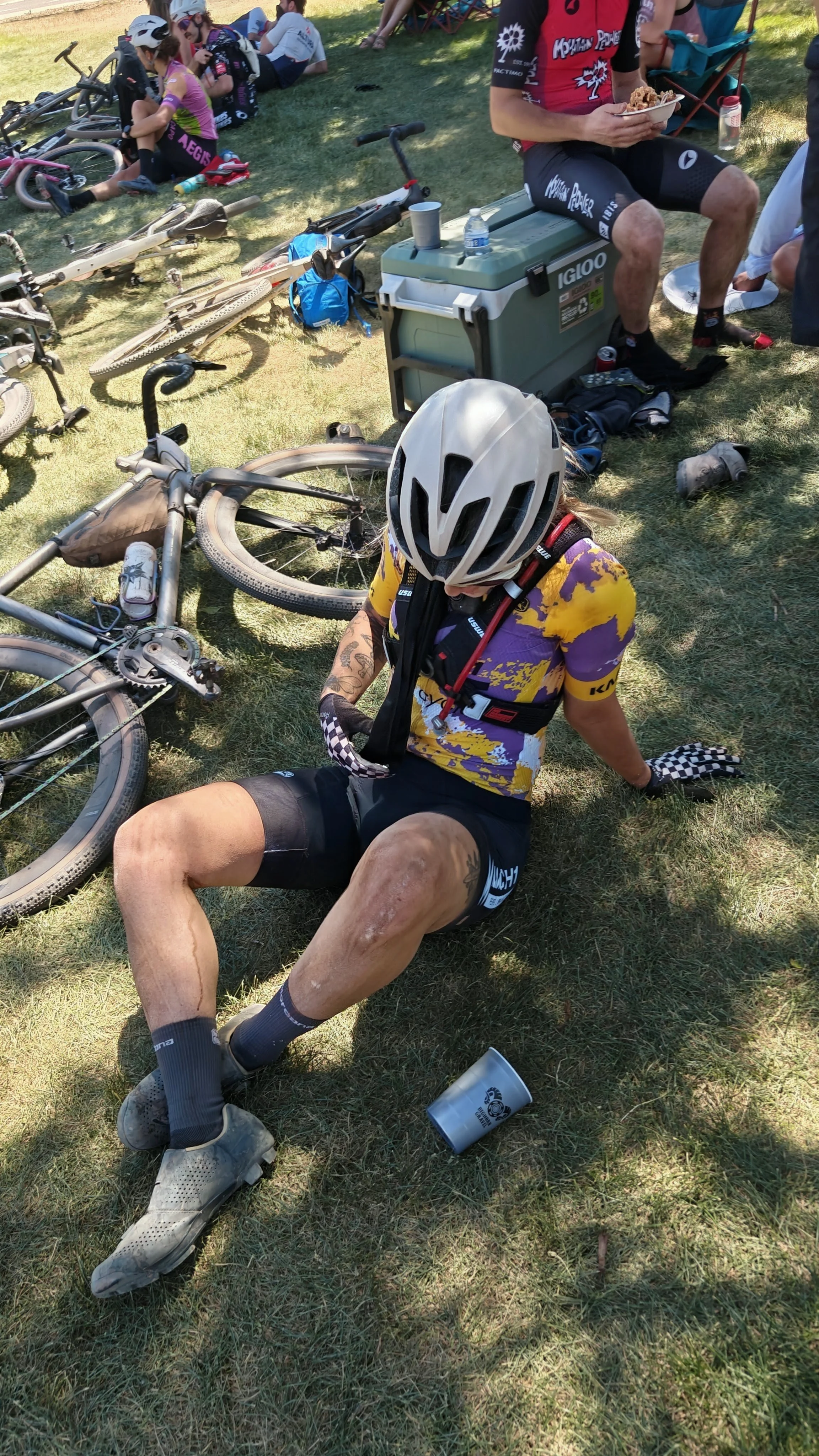
Last weekend I raced Bighorn Gravel in Colorado with some of our other riders on Mach1 Devo.
The course starts at roughly 6,600 feet above sea level and climbs all the way to over 11,000 feet at the summit of Hat Creek.
Looking at the elevation profile beforehand, everyone talks about the climb (and rightfully so!) It's massive. To the top, it’s roughly 18.5 miles and 4,000ft of vert, which took me over 2 hours to complete.

But what surprised me most wasn't the climb itself. It was how good I felt before everything changed.
For nearly four hours I felt fantastic. My power was controlled, my breathing felt comfortable, and I was fueling consistently.
I honestly thought I was having one of my better race days. Then somewhere near the top of Hat Creek, my stomach started fighting back. Fueling became harder and the effort felt completely different.
And suddenly I was reminded that altitude has a way of collecting the bill for decisions that happened hours earlier.
The Climb Didn't Cause The Problem
One of the biggest misconceptions about altitude is that it only affects you when you get really high.
In reality, the effects start much lower than most athletes realize.
Research shows aerobic performance begins declining around 5,000 feet, with VO₂max decreasing approximately 1-2% for every additional 1,000 feet of elevation gain above that point.
By the time we reached the summit of Hat Creek, we were more than 6,000 feet above that threshold.
The interesting thing is that the climb itself wasn't necessarily what made the race hard.
The climb simply exposed everything that happened beforehand.
Why The First Hour Matters More Than Most People Think
When most riders look at the Bighorn course profile, their attention goes straight to the giant climb.
What gets overlooked is how the race starts: Loose gravel, steep pitches, singletrack, and repeated accelerations.
Short efforts that force you above threshold long before the major climb begins.
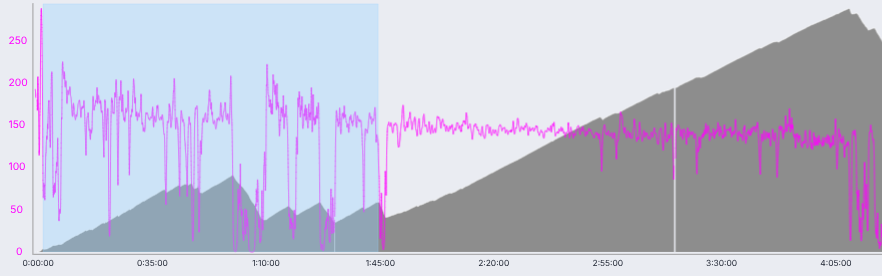
At sea level, those efforts are manageable. At altitude, they're much more expensive.
Every acceleration requires a rapid increase in oxygen delivery.
But because oxygen availability is already reduced, your body relies more heavily on anaerobic metabolism to produce energy.
That means:
Faster glycogen utilization
Higher lactate production
Greater sympathetic nervous system activation
Slower recovery between efforts
The result?
You can feel completely fine while quietly spending energy at a much faster rate than you realize.
What Altitude Actually Does To Your Body
Most people explain altitude as: "There's less oxygen."
…Technically that's true. But it's not the whole story.
The air at 11,000 feet still contains roughly 21% oxygen.
The difference is that atmospheric pressure is lower. Each breath contains fewer oxygen molecules available to move from your lungs into your bloodstream.
To compensate, your body immediately responds by:
Increasing breathing rate
Increasing heart rate
Increasing stress hormone production
Increasing carbohydrate utilization
This last point is important.
As oxygen becomes more limited, your body shifts toward using more carbohydrate and less fat for fuel because carbohydrate can produce ATP more rapidly per unit of oxygen consumed.
In other words: Altitude often makes athletes burn through glycogen faster than they would at sea level.
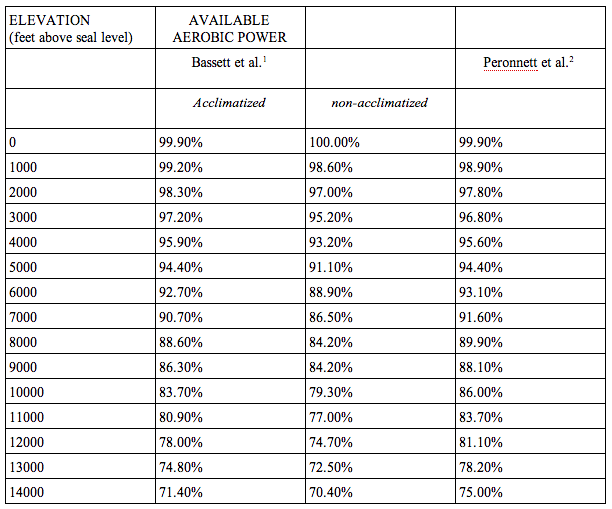
The following equations — generated from a study conducted on four groups of highly trained or elite runners — can be used to estimate aerobic power at a given altitude as a percentage (y) of what is normally available at sea level, where x = elevation above sea level in km.
for acclimatized athletes (several weeks at altitude): y = -1.12×2 – 1.90x + 99.9 (R2 = 0.973)
non-acclimatized athletes (1-7 days at altitude): y = 0.178×3 – 1.43×2 – 4.07x + 100 (R2 = 0.974)
Another study created the following equation.
y = -0.003×3 + 0.0081×2 – 0.0381x + 1
Source: https://www.trainingpeaks.com/blog/the-effect-of-racing-at-altitude/
Why GI Issues Become More Common At Altitude
This is where my race started to unravel.
The higher we climbed, the harder it became to fuel. And physiologically, that's not surprising.
During exercise, blood flow is prioritized toward working muscles. Your legs need oxygen. Your digestive tract doesn't get priority.
At altitude, this redistribution becomes even more pronounced. Less blood reaches the gastrointestinal system.
Less blood flow means:
Slower gastric emptying
Reduced carbohydrate absorption
Increased nausea
Greater risk of GI distress
At the same time, altitude increases circulating levels of adrenaline and other stress hormones, which can further suppress appetite and digestive function.
Add mild dehydration—which occurs more rapidly because you're breathing harder and losing more moisture through respiration—and you've created the perfect storm for stomach issues.
What felt like a sudden GI problem near the top of Hat Creek was likely building for hours.
The Practical Takeaway
If you're racing at altitude, the biggest mistake you can make is pacing for sea level.
The athletes who perform best aren't necessarily the strongest.
They're usually the ones who:
Stay patient during the opening hour
Avoid unnecessary surges
Respect the cost of repeated accelerations
Start fueling early
Accept that sustainable power will be lower than normal
Because altitude isn't just a fitness test. It's an energy management test!